Recently, the technical article “Developing a Framework for Micro-Optics Without Limits,” authored by Focuslight Technologies, was selected as a Featured Article in the September 2026 issue of the internationally recognized photonics magazine Photonics Spectra and published in its digital edition.
Abstract
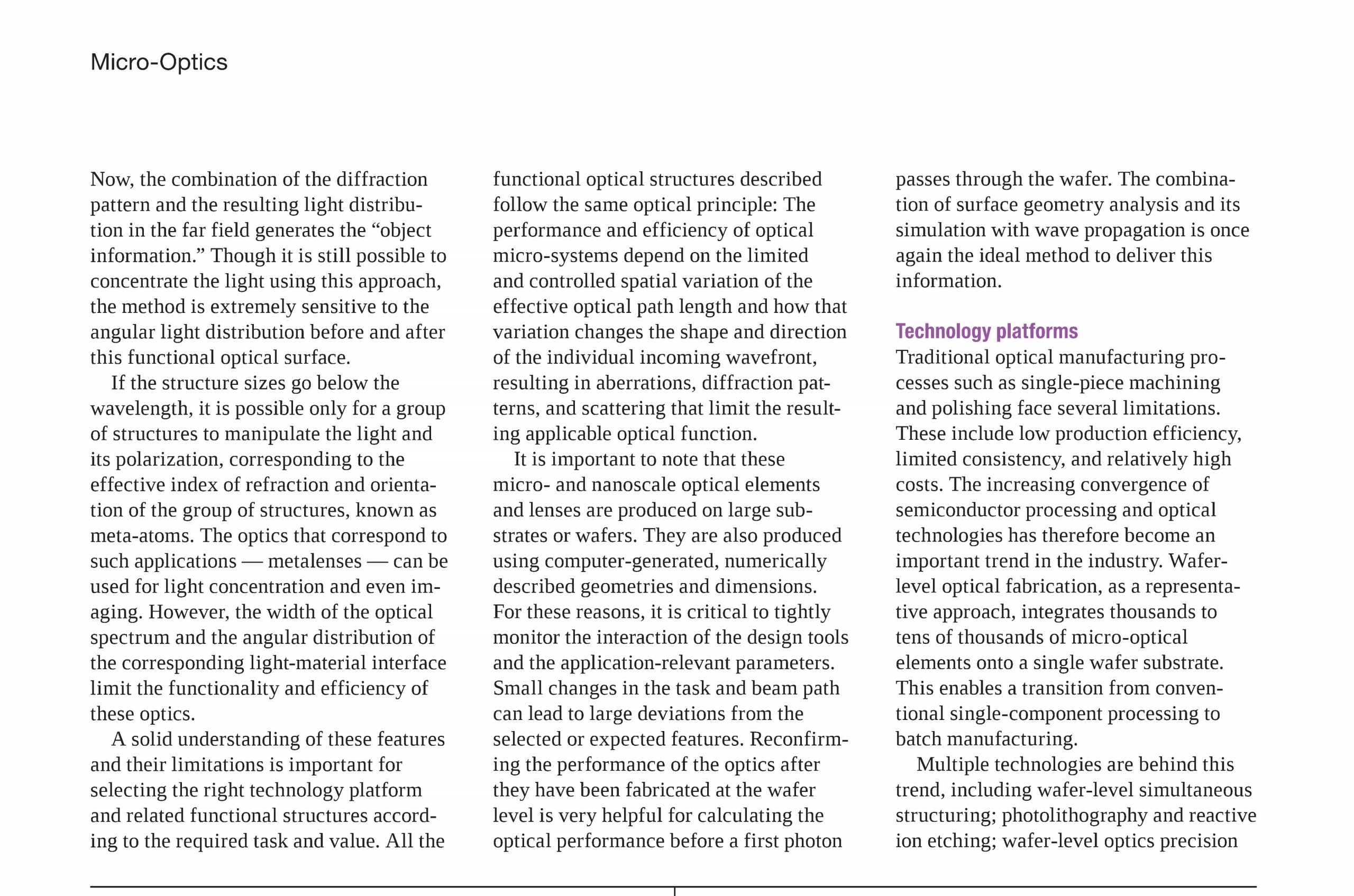
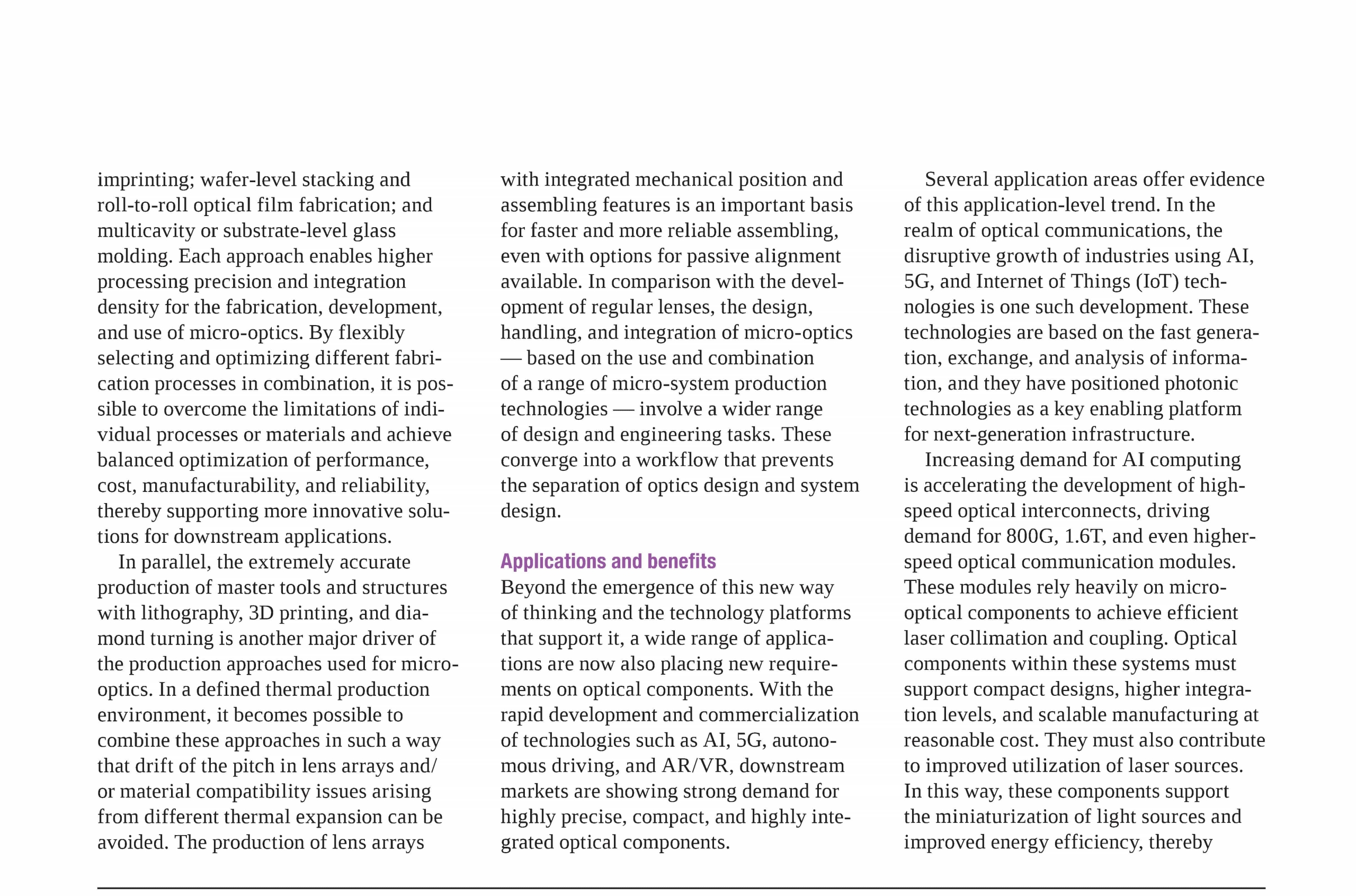
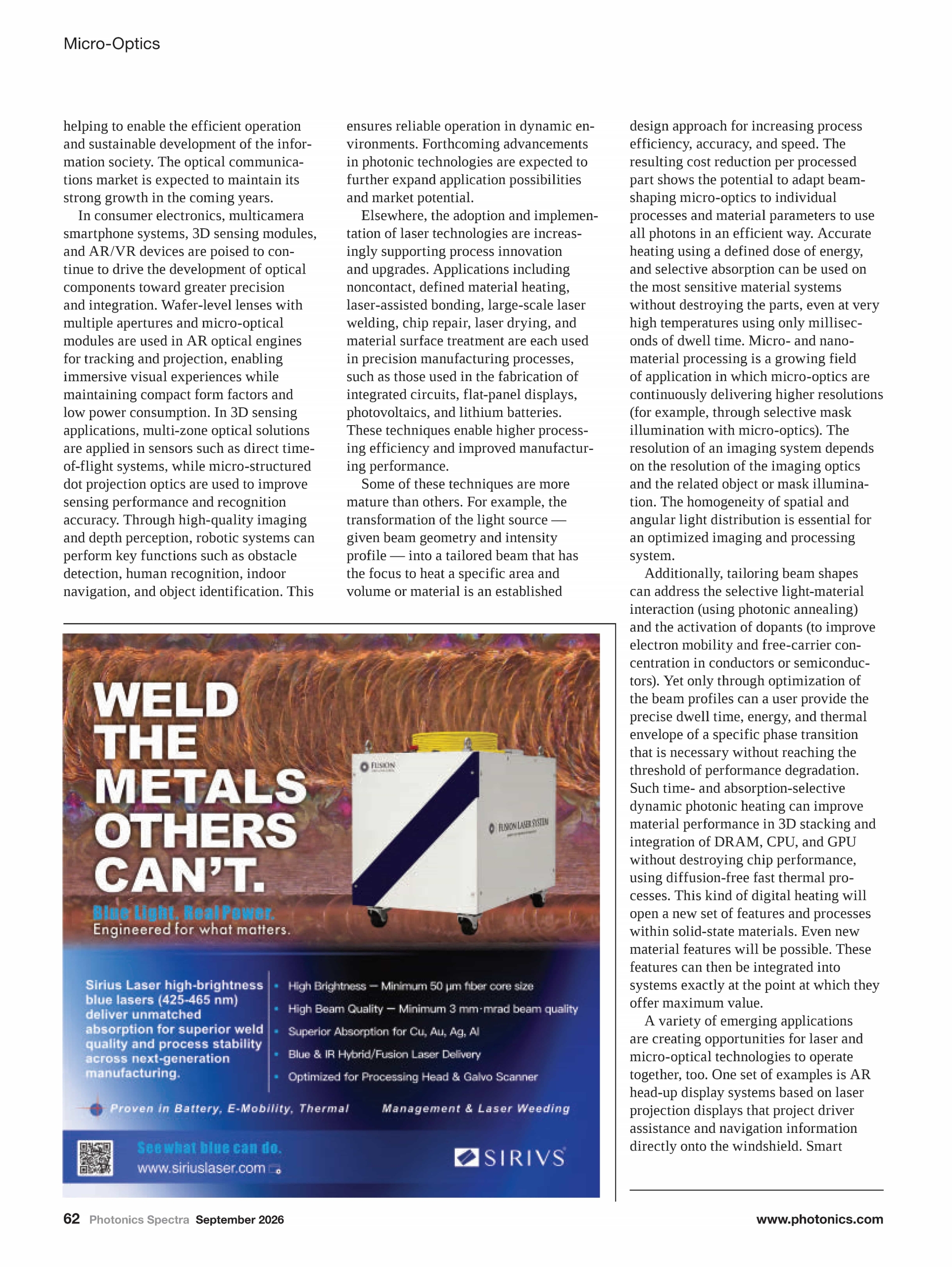
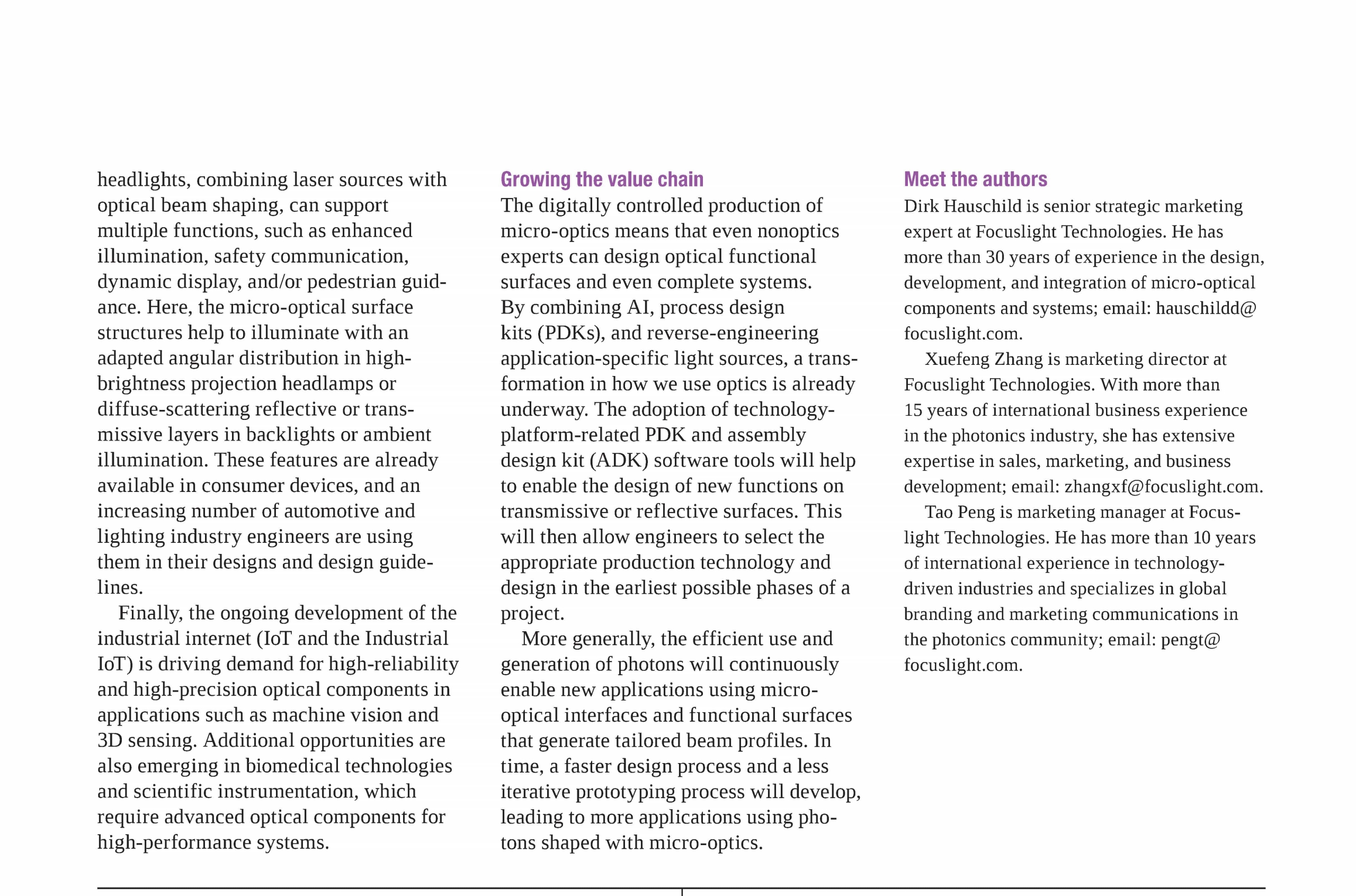
The broader adoption of photonic technologies depends not only on light sources that generate photons, but also on optical components that control, shape, and efficiently use them. As a critical bridge between light sources and end applications, micro-optics help photonics move from simply generating light toward engineering light for practical use.
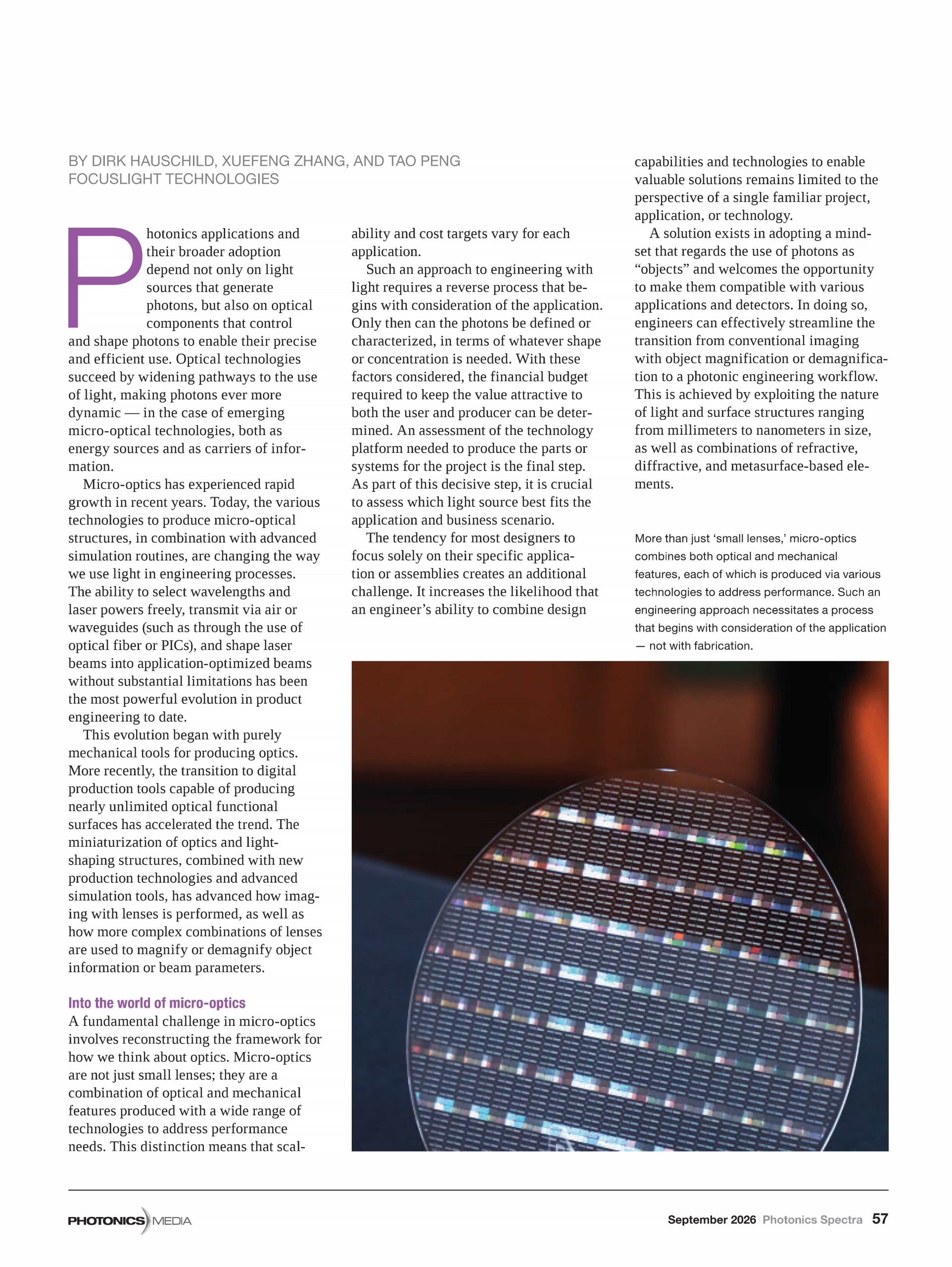
As micro-optical capabilities continue to advance, they are prompting a reconsideration of how optical systems are designed: how to establish an engineering framework that connects application requirements, physical principles, design methodology, manufacturing platforms, and industrial implementation. Micro-optics are not merely smaller conventional lenses; they combine optical functions with mechanical features. Their design therefore requires an application-first mindset: understanding the task and its value, defining the required photon shape, wavelength, and power level, evaluating the cost structure, and then selecting the appropriate technology platform to enable the co-optimization of optical design, mechanical integration, and scalable manufacturing.
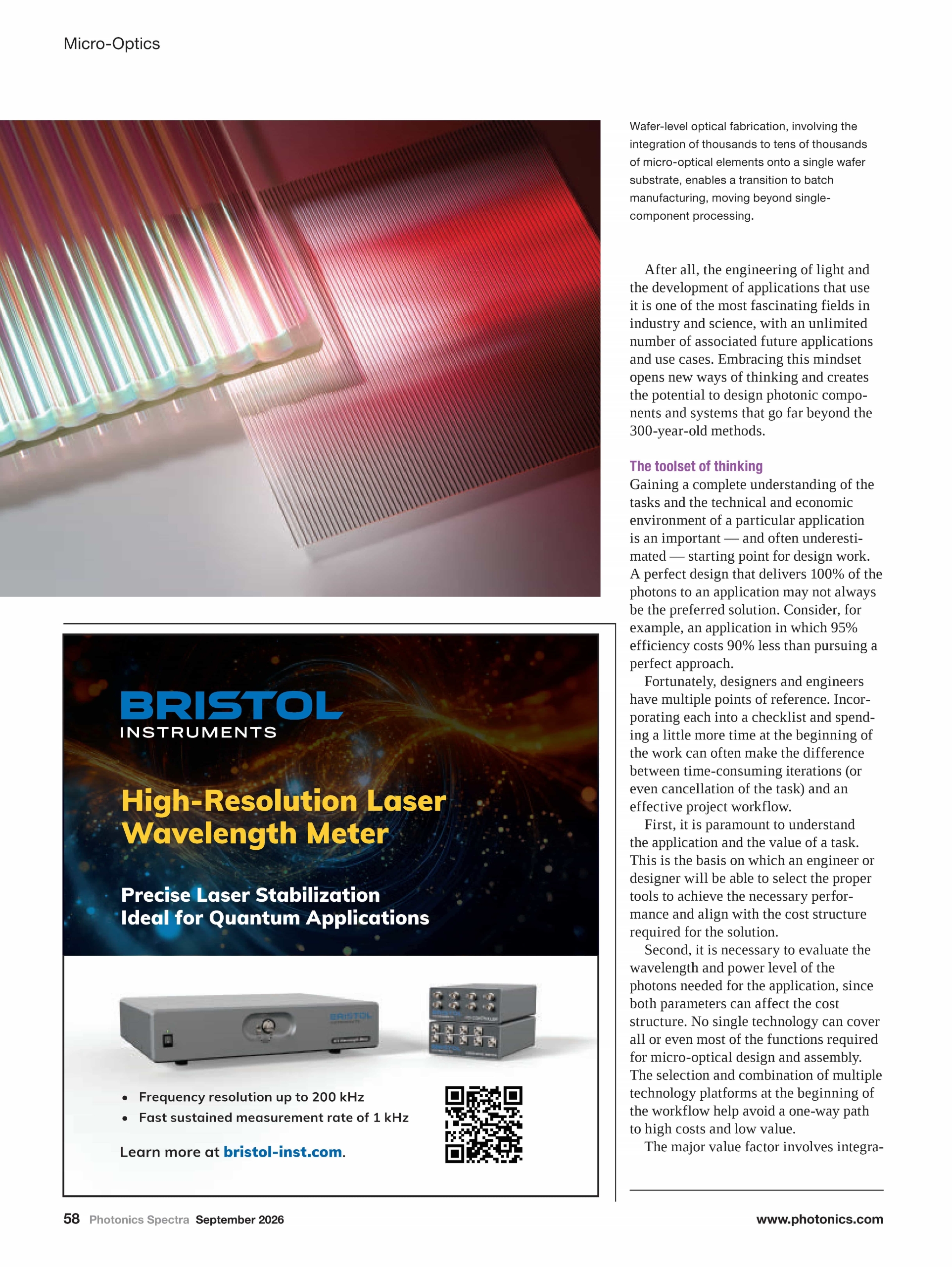
The article also reviews representative technology platforms, including wafer-level structuring, photolithography and reactive ion etching, precision imprinting and stacking, and precision molding. Through applications in optical communications, consumer electronics, semiconductor-related processes, smart mobility, healthcare, and industrial manufacturing, it shows how micro-optics can enable next-generation photonic systems. Looking ahead, AI-assisted design, process design kits, and assembly design kits are expected to further streamline micro-optics design and support a more platform-based, engineering-oriented future.
The full article above is reproduced from Photonics Spectra, September 2026 issue, pp. 56–63. Please click here to view the article on the Photonics Spectra website.









 Return